
The possibilities are endless when it comes to bookbinding. This - almost forgotten - craft is centuries old and is now considered a true art form. Not entirely undeserved if you know what is involved. The first bound books consisted of a method called Coptic Binding. Sets' of pages were folded and fastened with chain stitches. Nowadays, there are many variants and ways to bind books. Which ones they are, we will explain in this article.
Bookbinding
The type of finishing or binding of a book is actually determined by its use. Quite simply, not every binding is suitable for every project. In addition to the use, the number of pages, production costs and/or whether it will be a sustainable production are quality criteria for the choice of binding.
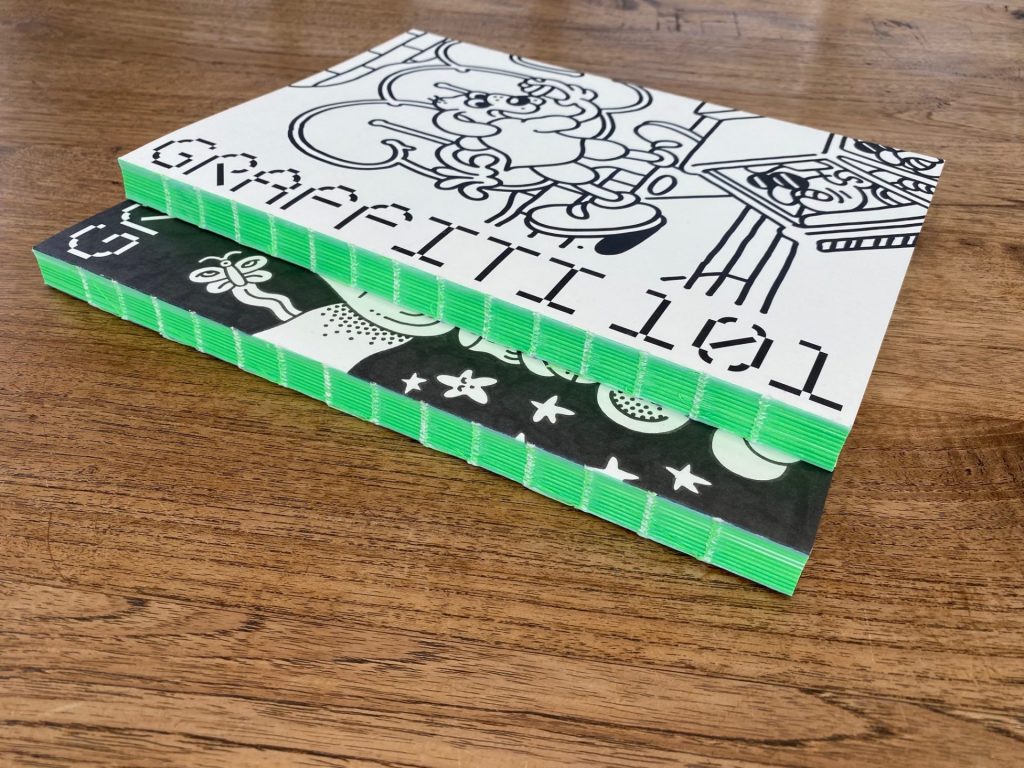
NPN|Graphius offers a variety of options for bookbinding. These include: Otabind®, Otastar®, Schweizer (optionally with a linen cover), and versions with sewn and glued spines, sewn perfect binding, and threadless perfect binding. These can be combined with cardboard covers for added strength. And don’t forget the hardcover versions.

- Otabind®
With this method of binding, the cover is not attached to the spine of the book block, but to the first and last page of the book block. When you open the book, you see a hollow space between the spine and the book block, which ensures that the book lies flat. A book that lies flat offers surprising results!
- Otastar®
The basis of Otastar® is identical to that of Otabind®.
The basis is identical to Otabind®. The "trigger marks" (the double bead) of Otabind® are nicely hidden by a second cover, which is glued to the first Otabind® cover with hotmelt. This also makes the cover on the back more solid.
- Schweizer
This binding method - Schweizer - is called the Swiss binding method. This method of binding means that the book block is bound by means of a strip of double-sided tape and/or cold glue. With this Swiss method a sewn book block is produced. You can also choose to cover it with linen. With this technique, too, the book falls nicely flat and stays open.
Schweizer and the version with sewn and glued back are produced with cold glue as standard. For the other techniques, you will have to specify this (more expensive) requirement. In consultation with the binder, we will always advise you if cold glue is possible or not.

- Case Bound
A sewn book is the most luxurious variant for the finishing of a book. The folded and gathered quires are sewn together with thread to form a book block, provided with a flexible glue and a gauze. Then the book block is glued to the hard cover with endpapers. A bound book is better known outside the graphic world as a book with hard cover or a hardcover.
- With a bound book, you have a lot of choice for both the book block and the binding.
- Round or straight back
- Capital band (in many colours)
- Reading ribbon (in many colours)
- End sheets in all colours or printed
- Attached CD/DVD with data bag, digitray or data board
- With printed paper, linen, wibalin or (imitation) leather in many colours
- Half-linen binding (linen spine with printed boards)
- Three-quarter-length linen band
- Foil printing in gold, silver and other colours, blind embossing
- Die-cut
- CD/DVD punched into the cover
- Greyboard, foam board, blackboard or whiteboard from 1.5 mm to 3.5 mm
How do you choose the right bond?
Of course, you’re free to decide for yourself what you want in general terms—especially when it comes to cost, sustainability, appearance, page layout, and so on. But NPN|Graphius is your expert when it comes to choosing the right binding for your project. We understand that having a book produced is a significant investment. That’s precisely why we want to maximize your chances of achieving a beautiful result.